

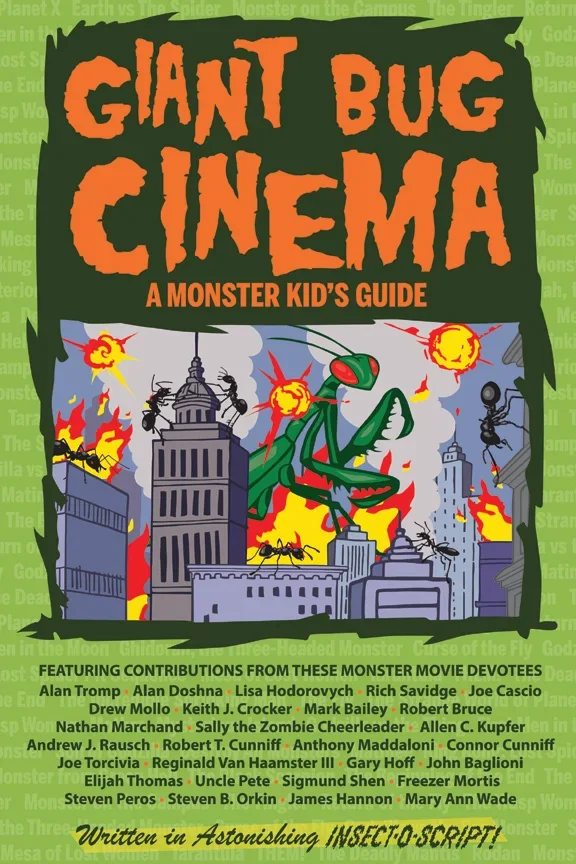
WRITINGElijah has contributed writing to multiple online publications specializing in kaiju cinema, with additional work published in Kaiju Ramen Magazine and two books: Giant Bug Cinema (BearManor Media) and G-Cinema (Fonthill Media). Dedicated to continually refining his craft, Elijah strives to produce informative, thoroughly researched, and detailed articles that educate readers and deepen their appreciation for the genre.
Film Press and PR
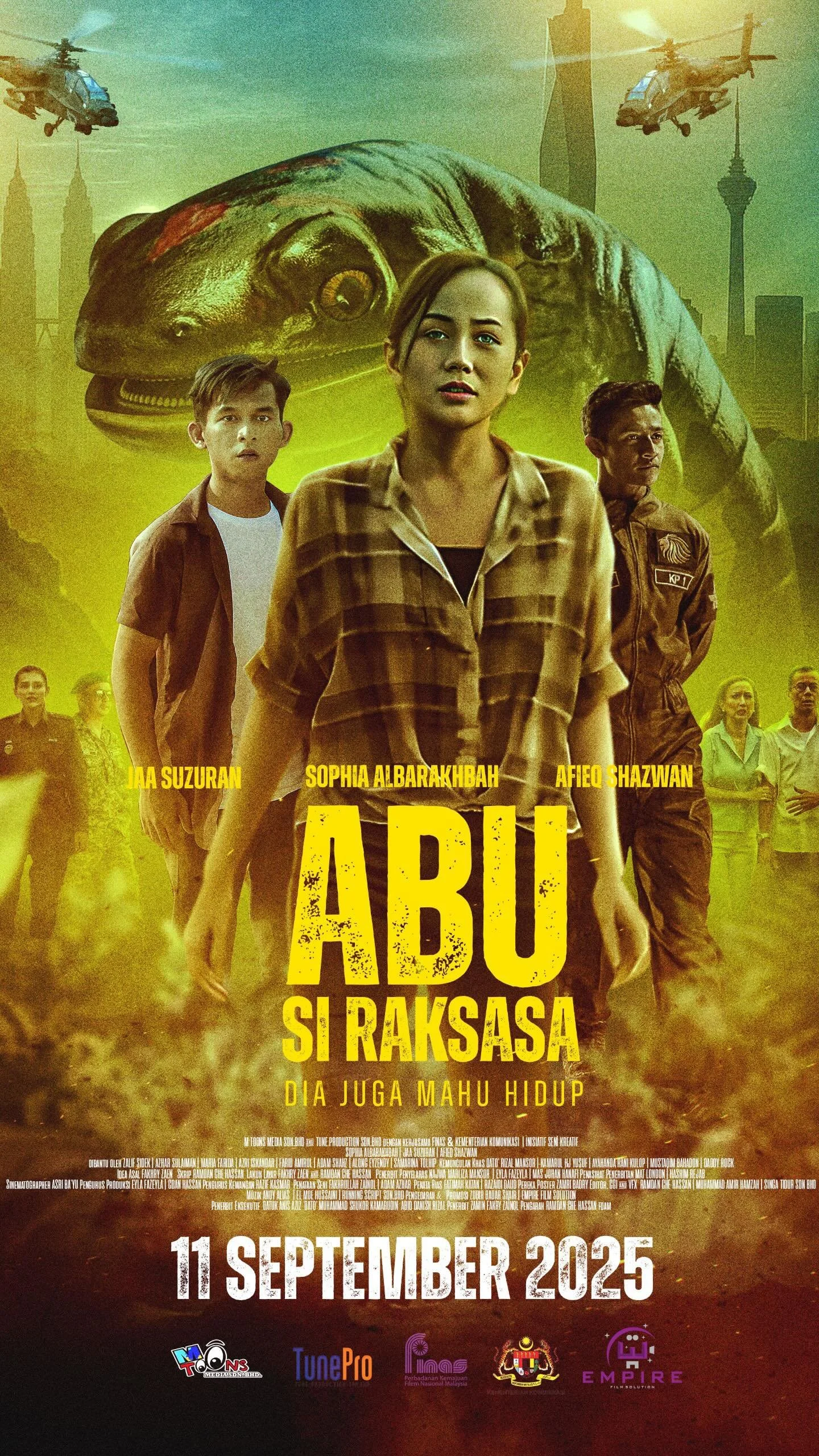
Elijah authored a press release for Abu the Giant, billed as Malaysia’s first authentic giant monster movie. The article served as the film’s sole English-language press material, attracting the attention of an international publicist who subsequently became involved with the project. This exposure ultimately helped secure a North American licensing deal for the film.
Social Media
In preparation for SRS Cinema’s release of Brush of the God, Elijah created a promotional social media video encouraging fans to send in testimonials for use in a special feature where fans expressed their excitement and interest in the movie.
Linear Notes
Nihon no Suma - A Journey Into Japanese Shark History
An essay written by Elijah exploring the history of sharks in Japan, both in pop culture and history. The essay was published on the Blu-ray release of Sharkdemic from SRS Cinema.
Web Articles
That Monster Will Never Forgive Us – The Director of Godzilla: -1.0 [Published by Kaiju United on September 27th, 2023]
Read full article here.
Excerpt:
Godzilla: Minus One [Gojira -1.0] is set to be released November 3, 2023, exactly sixty-nine years after the original film was released. This time, Toho has tapped the A-list Japanese director Takashi Yamazaki (Returner, Space Battleship Yamato, & The Always Sunset on Third Street trilogy) to bring the daikaijū back to the silver screens in Japan following the seven year time-gap between this production and 2016’s Shin Godzilla from the duo of Shinji Higuchi (Japan Sinks, Shin Ultraman, & the live-action Attack on Titan duology) and Hideaki Anno (Cutie Honey, Neon Genesis Evangelion, & Shin Kamen Rider). Director Yamazaki has been the top of many fan’s list to helm a new Toho Godzilla film for now well over a decade following the monster’s appearance in Yamazaki’s well received Always Sunset sequel that got the director two more Academy Award nominations for Best Picture and Best Screenplay (following the 14 wins the first Always Sunset On Third Street received at the 2006 Japanese Academy Awards). Since then, Yamazaki has went on to develop adaptations of Crayon Shin-Chan (who had a crossover with both Shin Godzilla and Shin Kamen Rider in the animated television show), Space Battleship Yamato, Parasyte, and has even adapted some World War II stories to the silver screen.
Interview: Donny Winter on YouTube and ‘Kaiju Galaxy’ [Published by Kaiju United and Kaiju Ramen Magazine]
Read full interview here.
Excerpt:
ET: What lessons would you tell a new content creator, whether they are doing kaijū or just fanfiction or writing or poetry or maybe even art, what would you tell a new creator?
DW: That’s a good question. The first thing that I would tell them is there will be many instances where you will feel like giving up, whether it be lack of use, someone telling you that they don’t like your work or just people not believing in you. Regardless, don’t allow any person like that to extinguish that creative spark that you have, because I firmly believe that the world deserves to witness what we have going on in our interiors. I feel like if you rob the world of that, you’re also sabotaging yourself in a certain way, right? Because we gain something through content creation, through art, through fanfiction writing, any of that, that is an examination of the human experience, but also like it is a legacy of sorts, right? Like we’re putting ourselves out there in some way, like we’re taking pieces of ourselves and putting it into what we create. I think that is just a validation of existence.
The other piece of advice I would give would be…You have to make time for your creative outlets. If you don’t make time for those things, you’re killing yourself in a certain way and it’s not fair to you to deny yourself the opportunities to express or to create.
I would say my last piece of advice is always to be open to constructive feedback, don’t allow yourself to grow as a creator, which is like the easiest way to fall into writer’s block or stagnancy in some way. And you never want to become, you know, angry at your creative outlets, right?
Film Criticism
Review: ‘Bloodspawn’ Non-Spoiler Review [Published by Kaiju United on October 14, 2024]
Quotes from this review were pulled by the producers of Bloodspawn to use as part of the marketing for the digital and physical release of the film.
Read the full review here.
Excerpt:
Bloodspawn is a film that brings back the joy of fun, campy monster movies in the same vein of Tremors and Gremlins. This is frequently showcased in all aspects of the film, from the opening with the synthonic music to the usage of puppetry for the ferocious Uktena. The film stars Raw Leiba (Conan The Barbarian), Roger Willie (Windtalkers), and Bill Oberst Jr. (3 From Hell) in this Civil War era fight between man and monster.
For fans of monster movies, Bloodspawn is a callback to the films they grew up with while not feeling like its hand feeding nostalgia. The film does a great job at exploring new and interesting ideas while still feeling like that of a traditional monster movie. The story follows a group of military men returning from a fight between them and Native Americans with one in shackles. On their journey home, they are attacked by the winged monster from indigenous mythology, the Uktena! It’s up to the men and the civilians they have crossed paths with on this journey to put aside their petty differences and social norms to fight against the creature! This proves to be more difficult than one would believe!
Published in Giant Bug Cinema: A Monster Kids Guide, Elijah’s review of Ghidrah: The Three Headed Monster earned him a Rondo Hatton Horror Award nomination in 2023.
Ghidorah, the Three Headed Monster (released as Ghidrah: the Three Headed Monster in the United States) is a 1964 Japanese daikaijū tokusatsū film directed by Ishiro Honda with special effects by Eiji Tsuburaya. The film stars Yosuke Natsuki, Yuriko Hoshi, Akiko Wakabayashi, and Hiroshi Koizumi in the greatest battle the Earth has ever witnessed! The film starts off with scientists watching for flying saucers as mysterious things are occuring, a heat wave in January, meteorite showers, and much more. One of the largest meteorites falls beyond a mountain range in Kurobe valley and the scientists send an expedition group to research and collect data on it. While this is going on, a plot to assassinate the princess of a third world country starts to unfold. On a secret plane ride to Japan, Princess Maas Salno is possessed by a strange light in the sky that tells her to jump from the plane. Once she jumps out, the plane explodes from a planted bomb!
The following day, she appears claiming to be a person from Venus (or Mars in the English dub). Police Detective Shindo sets out to try and find her to keep her safe, while his sister Naoko Shindo tries to find her for a news story to kick off a new documentary series called Mysteries of the 20th Century. The two end up working together to further understand the mystery that’s been bestowed upon the world and keep the Venusian (or Martian) or Princess, safe from a group of assassins determined to kill her.
If that wasn’t enough, a new monster appears from the meteorite named Ghidorah (or Ghidrah) that will destroy the Earth and all its population. It’s up to the three greatest kaijū of all time, Godzilla, Rodan, and Mothra to team-up and save the world from this unearthly foe! I love how the film starts with a mystery. The first few minutes are used to establish that the people of Japan are in a weird time. UFOs, heat waves, meteor showers, and mysterious voices from the sky.
Screenwriter Shinichi Sekizawa really wanted to go all-out in this film. It takes a good amount of time to introduce us to our main characters. Since this was still under the old way of casting actors in Japan, obviously the casting is as strong as always in Toho films, and the acting is solid. The characters really stand-out to me in this film unlike other Godzilla movies. I’m not sure why, but I think it has to do with the dynamic they each have and the subtle amount of comedy they’re given. The film clearly isn’t the serious tone that Gojira (1954) was, but it does have some intense scenes throughout the film. Particularly with the main antagonist King Ghidorah. With the human cast, I really liked the character of Shindo played by Yosuke Natsuki (Yojimbo and The Return of Godzilla), and his sister Naoko played by Yuriko Hoshi, (Mothra vs. Godzilla and Godzilla vs. Megaguirus). They have a traditional brother-sister dynamic. Along with the supporting cast of Murai (Hiroshi Koizumi), and Princes Salno (Akiko Wakabayashi), with appearances by Takashi Shimura (Ikiru, Gojira, and Seven Samurai), and a third but final performance by Yumi and Emi Ito (Mothra and Mothra vs. Godzilla) as The Shobijin. Together this ensemble cast brings a light-heartedness to the Godzilla franchise that they would try to replicate for years to come.
Besides the human characters, I feel as if this was the first time that the kaijū were able to emote in some way. The moment when Ghidorah hits the Mothra larva with a gravity beam and Godzilla comes running down the mountain hill to save her is full of emotion, even without any verbal or facial expressions. The sense of how powerful Ghidorah is can be felt in the final act when Godzilla, Rodan, and Mothra all had. to work together in order to fight off the golden dragon from beyond. Mothra in particular is a huge highlight of this film. She alone drives the monster plot for the entire third act of the movie. Without Mothra, we wouldn’t have Godzilla and Rodan teaming up to fight Ghidorah.
She teaches the lesson that we have to come together to fight the evil even when we don’t want to. Part of why I think the kaijū speak to me is the amazing special effects, directed by miniatures wizard Eiji Tsuburaya (who would only directly work on one more Godzilla film, Invasion of Astro-Monster (1965), before moving over to his own company Tsuburaya Productions to work on Ultra Q and Ultraman). The miniature buildings and suits look amazing for their time. Ghidorah especially is extraordinarily vibrant with it’s head and wing movement brought to life by strings being pulled by stagehands. This is something that every future incarnation of Ghidorah would lose (unless they utilized stock footage from this film in particular).
What could possibly be the cherry-on-top of this Japanese classic is the beautiful score by Akira Ifukube (best known for scoring the majority of the Godzilla franchise). He gives each monster a voice with their themes and motifs. From this film we are given the iconic sounds for both Ghidorah and Rodan. Not only that, but his other music for the film, like when the magnetic pulse from Ghidorah’s meteorite occurs, is so on-genre it stands out. It’s a great touch that has permanently been ingrained into my memories. Ifukube was able to make the music meaningful in these Toho genre films.
One issue I have with the original Japanese film is the editing. Throughout the film, there are examples of continuity errors with lighting, timing, and the overall pacing of the film; however, in the Walter-Reed English version of the movie, they fix these continuity errors and tighten up the pacing. In my honest opinion, I feel as if the American version is superior to the original cut because of this. Not to mention the dubbing isn’t too bad. They did a decent job with the voices and only fell slightly short by cutting some of Akira Ifukube’s music. An interesting thing to note is how Ishiro Honda would end up copying most of the edits made by Walter-Reed in his 1970 Toho-Champion Festival cut.
I remember watching the Anchor Bay VHS tape as a kid and adoring the monster action. Growing up, I adored the film and often revisited it. Ghidorah was the biggest, baddest, scariest monster there ever was! About a year ago, a local theater got approval from Janus Films to show the film in theaters for one weekend only. I immediately got tickets to see the film I had grown up with on the big screen. While watching the film, I could feel the monsters’ emotion. When the Mothra Larva got hit by Ghidorah’s gravity beam I felt the pain Mothra underwent. I was pushed to tears from watching these creatures scream in pain while onlookers dwelled on the loss of their homes. These Shōwa Godzilla films were made to be seen on the big screen. the powerful score by Akira Ifukube, the brilliant special effects by Eiji Tsuburaya, and amazing direction from Ishiro Honda. Overall, the film has a lot of great aspects to it. I have much nostalgia for this movie but it’s certain that this film is a don’t-miss, not only in the kaijū and tokusatsū genre, but the giant insect genre!